
#2-Why Analytics is Essential: Bridging the Gap Between Building and Selling

Today, I want to share a conceptual overview that can inspire anyone interested in analytics.
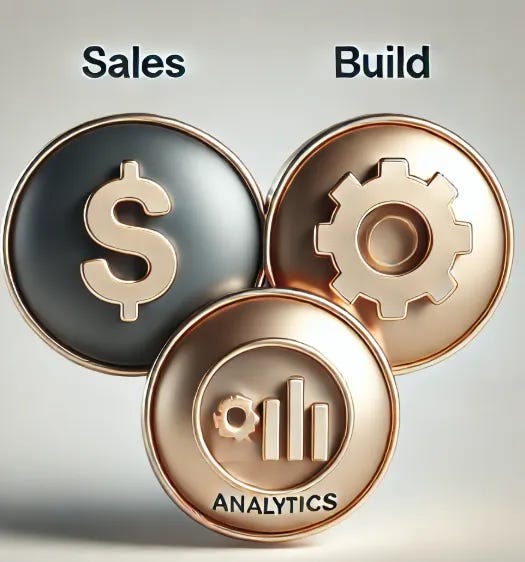
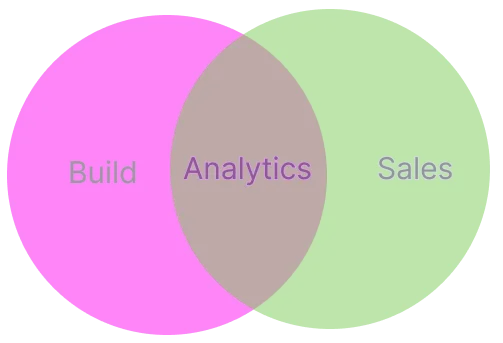
Business is simple but not easy. Fundamentally, every business revolves around two core activities: Build & Sell. You either create products or services and sell them. But where does analytics fit into this equation?

In our digital age, nearly every business—and even many individuals—have websites and applications. These channels exist primarily to sell or support something built by the company. Analytics bridges the gap between building and selling, making it indispensable for modern businesses.
Aristotle famously said, "The purpose of knowledge is action, not knowledge itself." Analytics transforms customer interactions into actionable insights. By implementing effective analytics:
You build exactly what customers want, reducing unnecessary development costs. You boost sales because your products directly align with customer needs. This creates a win-win scenario for product teams, sales teams, and customers alike.
How do you build an effective analytics system? Here's a simplified approach based on my experience:
The first task of the analytics team is aligning with business and development stakeholders and planning the tracking goals. I call this skill Data Architect.
The person with this skill should talk and align with relevant stakeholders and plan the following:
What are the objectives and metrics?
What is going to be tracked?
How are they going to be tracked, and which tools will be used?
How will the end-result data architecture look?
The second task of the analytics team is working with tools and documents. This skill is commonly called Tracking Specialist. To achieve proper tracking, there should be proper documentation about what is going to be tracked, how it is going to be tracked, how it will be implemented, and what the end result should look like. This documentation should be available for everyone in the company, especially developers, for clear communication. All relevant tool adjustments should be implemented with coordination, such as tracking implementation, Google Analytics custom definitions, Google Tag Manager, BigQuery, Hotjar, or Microsoft tool adjustments for proper tracking.
The third task of the analytics team is data processing, which requires a skill called Data Engineering. This task starts when data arrives in relevant tools such as BigQuery or other SQL databases. The Data Engineer should process the data and make it “usable” for visualization and analysis based on requirements.
The fourth task of the team is data analysis and data visualization. These are separate skills that help key stakeholders understand data, answer all the questions about data, and create metrics for tracking results. With good analytics reports, issues and areas of improvement can be surfaced. Each answered question generally creates insights about customers and generates action points for products and processes. This step generally ends with new tracking requests, and the cycle begins again with objectives and metrics. However, there is one more important step that should continue parallel to this cycle: data science.
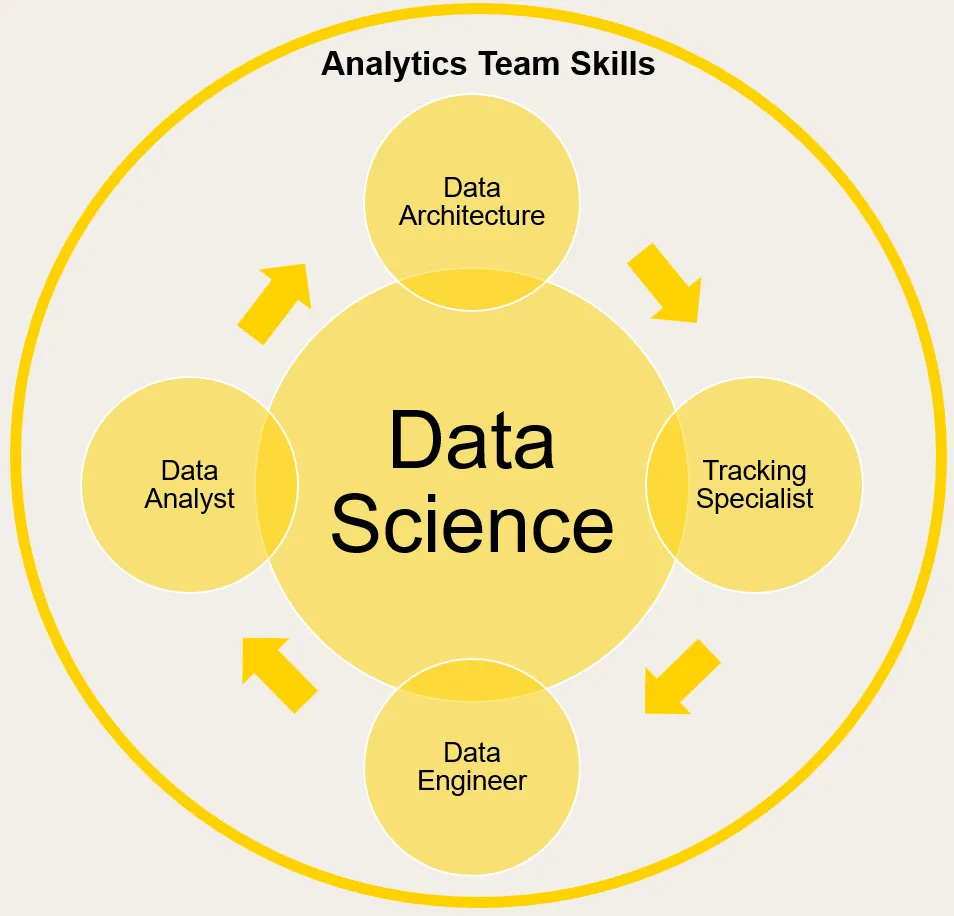
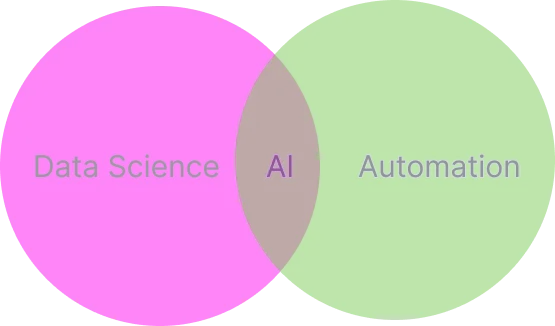
The fifth task of the team is data science. Data scientists can do all these tasks by themselves; moreover, they have the responsibility of utilizing data for further analysis, such as using machine learning, deep learning algorithms on data for classifications, clustering, creating forecasting models, using generative AI, creating applications, automating processes, etc. Since it is a wide-scoped task and skill group, data scientists should be chosen from creative, self-driven people.
With these skills and tasks, an analytics team can support every business because if there is no tracking, there is no data — which means the business is not optimized yet. This can be good news for a business owner who wants to start improving their business.
I have divided the skills and tasks into five categories, but even one person can have all these skills. As long as there is passion and good cooperation, the analytics team can create a great impact on any business.
No tracking means no data—and no data means untapped potential.
#DataScience #ArtificialIntelligence #Automation #AI #Data#Analyitcs